O-Level Physics
-
Anyone can advise how to do well for the SPA?
-
kitty2:
Anyone can advise how to do well for the SPA?
At this time, you are doing SPA (School Based Practical Assessment) Skill 3?
Regardless, your school teacher would have a few practice sessions/trials before the actual assessment.
1. Learn from the practice sessions/trials - what to take note of, time management during practical etc.
2. For Skill 3, there is a format to follow.
You will be able to do well if you put effort to remembering all of these.
All the best! :rahrah: -
ilovegoodkopi:
:thankyou: it's next month but for combine science. My nephew is weak in it.He cant carry out the practical and not much practice from the school too.kitty2:
Anyone can advise how to do well for the SPA?
At this time, you are doing SPA (School Based Practical Assessment) Skill 3?
Regardless, your school teacher would have a few practice sessions/trials before the actual assessment.
1. Learn from the practice sessions/trials - what to take note of, time management during practical etc.
2. For Skill 3, there is a format to follow.
You will be able to do well if you put effort to remembering all of these.
All the best! :rahrah: -
kitty2:
:thankyou: it's next month but for combine science. My nephew is weak in it.He cant carry out the practical and not much practice from the school too.[/quote]You are welcome.ilovegoodkopi:
[quote=\"kitty2\"]Anyone can advise how to do well for the SPA?
At this time, you are doing SPA (School Based Practical Assessment) Skill 3?
Regardless, your school teacher would have a few practice sessions/trials before the actual assessment.
1. Learn from the practice sessions/trials - what to take note of, time management during practical etc.
2. For Skill 3, there is a format to follow.
You will be able to do well if you put effort to remembering all of these.
All the best! :rahrah:
Combined Science Physics/Chem - that wouldn't be SPA. It would be O Level Practical Exams.
Schools will usually let students try practical exams from past year papers (about 10 practices)
For Physics Practical
(1) instructions are given very specifically. Your nephew must read the steps in detail and carefully. What readings to take, how many readings to take, tabulate values in ## decimal places etc.
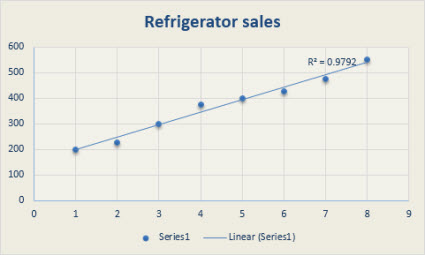
(2) He has to remember to rules when drawing graph i.e. Points plotted must cover at least half the grid of the graph paper, mark the points with a small cross (dots are not so visible at times), drawing a best fit line (straight or curve depending on instruction) - an example of line of best fit when all the points cannot be fitted on the line - https://support.content.office.net/en-us/media/9753c96c-6bfe-40eb-9fac-e7c8bcf72bd0.jpg
(3) Marking out using a triangle and state gradient coordinates on the graph if need to calculate gradient
(4) show clearly readings obtained from graph
Importantly take all practices in the school lab seriously because it is a learning experience before the actual exam.
(Hope someone can advice for Chemistry portion) -
Ilovegoodkopi, thank you so much for sharing and your kindness , is there any 10 year series for this?
 . Are the questions predictable?
:thankyou: -
kitty2:
Previously there weren't, but I thought I saw a practical exam past year papers assessment once.Ilovegoodkopi, thank you so much for sharing and your kindness , is there any 10 year series for this?
. Are the questions predictable?
:thankyou:
(Not the SPA one)
There are some typical questions for some topics
Light - Lens, refraction through glass block (there was a year that tested on apparent depth, that was tough)
Electricity - usually potentiometer and use of sliding contact
General Physics - Moment, Pendulum, an object roll down a ramp.
The important thing is to read the question and instruction thoroughly during the exam. I have to emphasize this because even if the question/diagram looks similar. Student should never assume that it is the same exact question.

-
ilovegoodkopi:
:thankyou: I think by now , won't be able to find it at the bookstores
Previously there weren't, but I thought I saw a practical exam past year papers assessment once.kitty2:
Ilovegoodkopi, thank you so much for sharing and your kindness , is there any 10 year series for this?
. Are the questions predictable?
:thankyou:
(Not the SPA one)
There are some typical questions for some topics
Light - Lens, refraction through glass block (there was a year that tested on apparent depth, that was tough)
Electricity - usually potentiometer and use of sliding contact
General Physics - Moment, Pendulum, an object roll down a ramp.
The important thing is to read the question and instruction thoroughly during the exam. I have to emphasize this because even if the question/diagram looks similar. Student should never assume that it is the same exact question.
-
I know it is exam time, but there are two things regarding scientific experiments that parents should make sure their children understand.
1.\tThe highest grade on a practical assessment may be given to the student that makes the fewest mistakes, however the exact opposite is true in both scientific research and in life. Thomas Edison made a great many failed attempts at inventing the light bulb. But he learned from his mistakes and he was persistent. It was these two qualities that lead to his being one of the greatest inventors of all time. And in life also, we all make mistakes. But the ability to admit them, learn from them, grow from them, and move on, is what builds our character.
2.\tMost of the important discoveries in science have come from experiments that DID NOT turn out as planned. JJ Thomson saw charged particles (electrons) coming out of different metals, from copper to gold to lead. But these particles were identical. What a shocker! How could gold and lead be made up of identical things! So you don’t do an experiment in science to regurgitate a pre-determined result. You do an experiment with an open mind to see what is going to happen. Yes, it is good to be disciplined with good technique, and the practicals can be good for that. But the mindset of being open to recognize and pursue the unexpected is the mark of a good scientist. When I did experiments in my classes, it was the students who played around a bit and discovered something outside of the normal procedure of the experiment and asked – why does this happen? – they learned the most.
Sorry to go all philosophical at exam time, but these are some things to consider as important lessons for students to absorb when the pressure of exams is not imminent. Do what you need to do to get the best grade on the SPA, and learn how to be methodical from it. But don’t forget the other qualities of how to be a good scientist! -
seeking advice here. Do you think hiring a last minute tutor will help in my DS’s O-level? I know it’s a bit late, but results from prelim seems alarming
-

amizade:
seeking advice here. Do you think hiring a last minute tutor will help in my DS's O-level? I know it's a bit late, but results from prelim seems alarming
Should be possible. My neighbour child got a tutor about one or two months before his O Level then. Managed to get B4 for his physics (from a failing grade I heard)
Hello! It looks like you're interested in this conversation, but you don't have an account yet.
Getting fed up of having to scroll through the same posts each visit? When you register for an account, you'll always come back to exactly where you were before, and choose to be notified of new replies (either via email, or push notification). You'll also be able to save bookmarks and upvote posts to show your appreciation to other community members.
With your input, this post could be even better 💗
Register Login