LATEST:Tokyo hit by 8.9 mag earthquake and 10-m high tsunami
-
hquek:
well Malaysia is not the only one considering. I read in papers few days ago that Indo has plans to build a plant too, and it apparently is to be situated in a region known for quakes....now I'm quaking....
Mankind's Inventions are causing more distruction, rather than Mother Nature. -
wonder how they are cleaning babies, since tap water not safe for them
-
LKVM:
Yeah so many things getting contaminated due to the radiation.. wonder why its always Japan :?
It's unfortunate location. -
hquek:
well Malaysia is not the only one considering. I read in papers few days ago that Indo has plans to build a plant too, and it apparently is to be situated in a region known for quakes....now I'm quaking....
For Malaysia n Indonesia, d proximity to SG n d possibility of human error n/or negligence
coupled with Indonesia situated along d Ring of Fire is worrisome.
Some seismologists hv 'speculated' another big earthquake along d Sunda Trench (Sumatra) n Pacific Trench (Japan) within dis decade. -
SAHM_TAN:
d gahmen is likely looking at all viable options so as to reduce dependency on fossil fuels.
Even before the tragedy in Jap, I did not want SG to build one. Sure there's no earthquake but there's always human error. I mean even a poor village in India can build and depend on solar energy, why can't we, ok we will use much more energy than a village in India but surely there's a solution. If need nuclear energy to maintain our lifestyle, I will give up my air-con, my TV, my water heater, my electric fan, half the time I spend on computer... As for Malaysia, hopefully, they have more sense
Solar energy is still expensive to implement.
Wind energy requires a lot of space to generate enuf electricity but
SG doesn't has d luxury of space.
Wave energy development is still in its infancy.
Nuclear energy has been ard for > 60 years.
In those 60 years, there hv been only 3 major nuclear crisis:
Chernobyl n 3 Mile Island were accidents due to human error;
Fukushima was by force of nature.
So to look in perspective, 3 major incidents in 60 years is a pretty good safety record.
Newer nuclear plants r built safer than d one at Fukushima Daiichi power plant,
which was an early Mark I design by GE.
Nonetheless, in deciding to build one, safety n proximity to human population must be prime n foremost considerations.
In a small island city state with limited landmass n expected 6.5 mil ppl,
where to locate a nuclear plant? -
SAHM_TAN:
Some paraniod questions, if tap water is not safe for babies, then how about the breastmilk from mothers? Breastfeeding mothers drink the tap water, won't some of the radiation pass to the breastmilk, rending it unsafe too? Does that mean must drink imported distilled water? But will items imported into the area be affected by the radiation too?
Radioactive iodine will pass from mother's milk to infant. -
Daddy

Mankind's Inventions are causing more distruction, rather than Mother Nature.
Well we can't always live in caves.
Oppenheimer remarked dat they hv created a monster when his team built d first atomic bomb. -
SAHM_TAN:
Also dunno if they have access to imported distilled water now........poor babies...
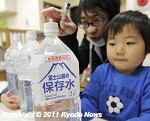
Tokyo - today's photo.
http://postimage.org/image/9rmvrcpw/
A shipment of water for distribution in Emergency program to children.
http://photo.kyodonews.com/photo_thumbnail/324110324135230_Safe_water_for_child.jpg

-
Way2GO:
The damage done will not be limited to one generation or within a specific location, so my vote is still against
d gahmen is likely looking at all viable options so as to reduce dependency on fossil fuels.
Solar energy is still expensive to implement.
Wind energy requires a lot of space to generate enuf electricity but
SG doesn't has d luxury of space.
Wave energy development is still in its infancy.
Nuclear energy has been ard for > 60 years.
In those 60 years, there hv been only 3 major nuclear crisis:
Chernobyl n 3 Mile Island were accidents due to human error;
Fukushima was by force of nature.
So to look in perspective, 3 major incidents in 60 years is a pretty good safety record.
Newer nuclear plants r built safer than d one at Fukushima Daiichi power plant,
which was an early Mark I design by GE.
Nonetheless, in deciding to build one, safety n proximity to human population must be prime n foremost considerations.
In a small island city state with limited landmass n expected 6.5 mil ppl,
where to locate a nuclear plant? -
Way2GO:
At least mothers can drink prepackaged drinks or other drinks that don't require being made up with water. Well, hopefully they are getting some of that. But babies cannot drink those, so it's just mothers' milk or formula milk for them. Hopefully the babies who are not breastfeeding are getting some supplies of prepackaged formula that are ready-to-drink and not require water as well.SAHM_TAN:
Some paraniod questions, if tap water is not safe for babies, then how about the breastmilk from mothers? Breastfeeding mothers drink the tap water, won't some of the radiation pass to the breastmilk, rending it unsafe too? Does that mean must drink imported distilled water? But will items imported into the area be affected by the radiation too?
Radioactive iodine will pass from mother's milk to infant.
Hello! It looks like you're interested in this conversation, but you don't have an account yet.
Getting fed up of having to scroll through the same posts each visit? When you register for an account, you'll always come back to exactly where you were before, and choose to be notified of new replies (either via email, or push notification). You'll also be able to save bookmarks and upvote posts to show your appreciation to other community members.
With your input, this post could be even better 💗
Register Login